
Science
Philosophy
A high-quality science education provides the foundations for understanding the world through the specific disciplines of
biology, chemistry and physics. Science has changed our lives and is vital to the world’s future prosperity, and all
pupils should be taught essential aspects of the knowledge, methods, processes and uses of science. Through building
up a body of key foundational knowledge and concepts, pupils should be encouraged to recognise the power of
rational explanation and develop a sense of excitement and curiosity about natural phenomena.
They should be encouraged to understand how science can be used to explain what is occurring, predict how things will behave, and analyse causes.
Science in our school is about developing children’s ideas and ways of working that enable them to make sense of the world in which they live, through investigation, as well as using and applying process skills.
Spoken language
The National Curriculum for Science reflects the importance of spoken language in pupils’ development across the
whole curriculum – cognitively, socially and linguistically. The quality and variety of language that pupils hear and
speak are key factors in developing their scientific vocabulary and articulating scientific concepts clearly and
precisely. They must be assisted in making their thinking clear, both to themselves and others, and teachers
should ensure that pupils build secure foundations by using discussion to probe and remedy their misconceptions.
Attitudes
• Encourage the development of positive attitudes to science.
• Build on our children’s natural curiosity and help them to develop a scientific approach to problems.
• Encourage open-mindedness, self-assessment, perseverance and responsibility.
• Build our children’s self-confidence to enable them to work independently.
• Develop our children’s social skills to work collaboratively with others.
• Provide our children with an enjoyable experience of science, so that they will develop a deep and lasting
interest and may be motivated to study science further.
Skills
• Give our children an understanding of scientific processes.
• Help our children to acquire practical scientific skills.
• Develop the skills of investigation - including observing, measuring, predicting, hypothesising,
experimenting, communicating, interpreting, explaining and evaluating.
• Develop the use of scientific language, recording and techniques.
• Develop the use of ICT in investigating and recording.
• Enable our children to become effective communicators of scientific ideas, facts and data
Intent
At St Aidan’s Primary School, we believe that a high-quality science education provides the foundations for
understanding the world through the specific disciplines of biology, chemistry and physics.
Science has changed our lives and is vital to the world’s future prosperity, and all pupils should be taught essential aspects of the ; all pupils should be taught the essential aspects of the knowledge, methods, processes,knowledge, methods, processes and uses of science. Through building up a body of key foundational knowledge
and concepts, pupils should be encouraged to recognise the power of rational explanation and develop a sense of excitement and curiosity about natural phenomena. They should be encouraged to understand how science can be
used to explain what is occurring, predict how things will behave, and analyse causes.
Science in our school is about developing children’s ideas and ways of working that enable them to make sense of
the world in which they live through investigation, as well as using and applying process skills. The staff at St
Aidan’s ensures that all children are exposed to high quality teaching and learning experiences, developing their
scientific enquiry and investigative skills. They are immersed in scientific vocabulary, which aids children’s
knowledge and understanding not only of the topic they are studying, but of the world around them. We intend
to provide all children regardless of ethnic origin, gender, class, aptitude or disability, with a broad and balanced
science curriculum.
Our School Science Curriculum is broad and balanced. It is accessed by all children, as is their entitlement,
regardless of ethnic origin, gender, class, aptitude or disability.
Our Science Curriculum will:
• Prepare our children for life in an increasingly scientific and technological world.
• Foster concern about, and actively care for, our environment.
• Help develop and extend our children’s scientific concept of their world.
• Develop our pupils understanding of the international and collaborative nature of science.
• Develop scientific knowledge and conceptual understanding, through the specific disciplines of biology,
chemistry and physics.
• Develop understanding of the nature processes and methods of science through different types of scientific
enquiries that help our children answer scientific questions about the world around them.
• Equip children with the scientific knowledge required to understand the uses and implications of science,
today and for the future.
Curriculum Outcomes Statement
The aspiration of the St. Aidan’s Catholic Primary School’s Curriculum is that all children, regardless of their
ability, experience success. We give children opportunities to excel and receive support to achieve.
We have given careful, measured and clear considerations of the National Curriculum, to translate into outcomes
for each age group. These outcomes take into account children’s access to substantive knowledge and disciplinary
skills, ensuring children have the experience of working as a scientist.
Children in Years 1/3/5 are initially taught the objectives and are beginning to learn the knowledge and skills of
the area of learning. They may receive additional support and evidence of adapted teaching.
Children in these Year groups, working with a Deeper Understanding, will be achieving within the outcomes for
Years 2/4/6.
Children in Year 2/4/6 are expected to deepen their understanding by applying their learning and doing so with
some level of independence. There will be evidence of drawing on knowledge, applying skills and making links to
previous learning in the subject and other areas of the curriculum.
Where and when relevant, this distinction will be evident in the tasks, and through Work and Talk Studies.
In addition, this information will be used to link prior and future learning and reflected to adapt and influence
further learning opportunities, including those to reflect, revisit and remember.
Implementation
In ensuring high standards of teaching and learning in science, we implement a curriculum that is progressive
throughout the whole school. Planning for science is a process in which all teachers are involved to ensure that the
school gives full coverage of, ‘The National Curriculum programmes of study for Science 2014’ and,
‘Understanding of the World’ in the Early Years Foundation Stage. Science teaching at St Aidan’s Primary School
involves adapting and extending the curriculum to match all pupils’ needs. Where relevant, Science is linked to
class topics. Science is taught as discrete units and lessons where needed to ensure coverage. Due to one and a
half form entry in our school, Science units in mixed year groups are taught on a 2 year rolling programme. This
ensures progression between year groups and guarantees topics are covered. Teachers plan to suit their children’s
interests, current events, their own teaching style, the use of any support staff and the resources available.
We ensure that all children are provided with rich learning experiences that aim to:
• Prepare our children for life in an increasingly scientific and technological world today and in the future.
• Help our children acquire a growing understanding of the nature, processes and methods of scientific
ideas.
• Help develop and extend our children’s scientific concept of their world.
• Build on our children’s natural curiosity and developing a scientific approach to problems.
• Encouraging open-mindedness, self-assessment, perseverance and developing the skills of investigation –
including: observing, measuring, predicting, analysing, hypothesising, experimenting, communicating,
interpreting, explaining and evaluating.
• Develop the use of scientific language, recording and techniques.
• Develop the use of computing in investigating and recording.
• Make links between science and other subjects.
At St Aidan’s we aspire to promote children’s independence and for all children to take responsibility in their own learning. We have also developed scientific vocabulary tasks, which are completed both at the beginning (pre-
learning task) and end (post-learning task) of a topic in order to show clear progression and children’s new found
knowledge and understanding. These tasks also enable the children to articulate scientific concepts clearly and
precisely, assisting them in making their thinking clear, both to themselves and others.
Teachers have access to a wide variety of resources to support them to plan each unit, which are all in line with
the New Curriculum. They also have an overview of end of year expectations, which will ensure good coverage of
each programme of study and cater for progression within each area. Scientific Knowledge, Conceptual
understanding and Scientific Enquiry are incorporated within each topic. Children will develop their range of
scientific vocabulary using the new vocabulary mats introduced. Science will be taught to the whole class with
opportunities to carry out investigative work in small groups.
Across each year group, each pupil will cover a full range of experiences.
Early years
In Early Years Science is taught as an integral part of the topic work covered during the year. They relate the
scientific aspects of the children’s work to the objectives set out in the Early Outcomes and Development Matters
documents, which underpin the curriculum planning for children from birth to five. Science makes a significant
contribution to the development of each child’s understanding of the world. Children’s own ideas and interests are
an essential part of the planning and teaching and teachers encourage children to develop their own scientific
thinking by developing their own experiments and guide them to find the answers to their own questions and
enquiries.
Early Years children should be able to:
• Know about similarities and differences in relation to places, objects, materials & living things.
• Talk about the features of their own immediate environment and how environments might vary from one
another.
• Make observations of animals & plants & explain why some things occur, and talk about changes.
• Ask questions to gain information about the world around them.
Key Stage One
The principal focus of science teaching in key stage 1 is to enable pupils to experience and observe phenomena,
looking more closely at the natural and humanly-constructed world around them.
• They should be encouraged to be curious and ask questions about what they notice.
• They should be helped to develop their understanding of scientific ideas by using different types of scientific enquiry to answer their own questions, including observing changes over a period of time,
noticing patterns, grouping and classifying things, carrying out simple comparative tests, and finding
things out using secondary sources of information.
• They should begin to use simple scientific language to talk about what they have found out and
communicate their ideas to a range of audiences in a variety of ways.
• Most of the learning about science should be done through the use of first-hand practical experiences, but
there should also be some use of appropriate secondary sources, such as books, photographs and videos.
• Pupils should read and spell scientific vocabulary at a level consistent with their increasing word reading
and spelling knowledge at key stage 1.
Working scientifically
‘Working scientifically’ is described separately in the programme of study, but must always be taught through and
clearly related to the teaching of substantive science content in the programme of study.
At the end of Key Stage
1 most pupils will be able to:
▪ Ask simple questions and recognise that they can be answered in different ways
▪ Observe closely, using simple equipment
▪ Perform simple tests
▪ Identify and classify
▪ Use their observations and ideas to suggest answers to questions
▪ Gather and record data to help in answering questions
At the end of Key Stage 1 pupils will have covered:
Biology
• Plants
• Animals, including humans
• Living things and their habitats
Chemistry
• Everyday materials
• The uses of everyday materials
Physics
• Seasonal changes
Lower Key Stage 2
The principal focus of science teaching in lower key stage 2 is to enable pupils to broaden their scientific view of
the world around them.
• They should do this through exploring, talking about, testing and developing ideas about
everyday phenomena and the relationships between living things and familiar environments.
• They should ask their own questions about what they observe and make some decisions about which
types of scientific enquiry are likely to be the best ways of answering them, including observing changes
over time, noticing patterns, grouping and classifying things, carrying out simple comparative and fair
tests and finding things out using secondary sources of information.
• They should draw simple conclusions and use some scientific language, first, to talk about and, later, to
write about what they have found out.
• Pupils should read and spell scientific vocabulary correctly and with confidence, using their growing word
reading and spelling knowledge.
Working scientifically
‘Working scientifically’ is described separately at the beginning of the programme of study, but must always be
taught through and clearly related to substantive science content in the programme of study.
At the end of Lower Key Stage 2 most pupils will be able to:
• Ask relevant questions and use different types of scientific enquiries to answer them.
• Set up simple practical enquiries, comparative and fair tests.
• Make systematic and careful observations and, where appropriate, take accurate measurements using
standard units, use a range of equipment, including thermometers and data loggers.
• Gather, record, classify and present data in a variety of ways to help in answering questions
• Record findings using simple scientific language, drawings, labelled diagrams, keys, bar charts, and
tables.
• Report on findings from enquiries, including oral and written explanations, displays or presentations of
results and conclusions.
• Use results to draw simple conclusions, make predictions for new values, suggest improvements and raise
further questions.
• Identify differences, similarities or changes related to simple scientific ideas and processes.
• Use straightforward scientific evidence to answer questions or to support their findings.
At the end of Lower Key Stage 2 pupils will have covered:
Biology
• Plants
• Animals, including humans
• Living things and their habitats
Chemistry
• Rocks
• States of matter
Physics
• Electricity
• Forces and magnets
• Sound
• Light
Upper Key Stage 2
The principal focus of science teaching in upper key stage 2 is to enable pupils to develop a deeper understanding
of a wide range of scientific ideas.
• They should do this through exploring and talking about their ideas; asking their own questions about
scientific phenomena; and analysing functions, relationships and interactions more systematically.
• They should encounter more abstract ideas and begin to recognise how these ideas help them to
understand and predict how the world operates.
• They should also begin to recognise that scientific ideas change and develop over time.
• They should select the most appropriate ways to answer science questions using different types of scientific
enquiry, including observing changes over different periods of time, noticing patterns, grouping and
classifying things, carrying out comparative and fair tests and finding things out using a wide range of
secondary sources of information.
• Pupils should draw conclusions based on their data and observations, use evidence to justify their ideas,
and use their scientific knowledge and understanding to explain their findings.
• Pupils should read and spell scientific vocabulary correctly and with confidence, using their growing word
reading and spelling knowledge.
Working scientifically
‘Working scientifically’ is described separately at the beginning of the programme of study, but must always be
taught through and clearly related to substantive science content in the programme of study.
At the end of Upper
Key Stage 2 most pupils will be able to:
• Plan different types of scientific enquiries to answer questions, including recognising and controlling
variables where necessary.
• Take measurements, using a range of scientific equipment, with increasing accuracy and precision, taking
repeat readings when appropriate.
• Record data and results of increasing complexity using scientific diagrams and labels, classification keys,
tables, scatter graphs, bar and line graphs.
• Use test results to make predictions to set up further comparative and fair tests.
• Report and present findings from enquiries, including conclusions, causal relationships and explanations of
results, explanations of and degree of trust in results, in oral and written forms such as displays and other
presentations.
• Identify scientific evidence that has been used to support or refute ideas or arguments.
At the end of Upper Key Stage 2 pupils will have covered:
Biology
• Animals, including humans
• Living things and their habitats
• Evolution and Inheritance
Chemistry
• Properties and changes of materials
Physics
• Electricity
• Forces
• Earth and Space
• Light
Impact
Assessment recording and reporting does not stand alone and is integrated into the planning process. There is a
balance between formative and summative. Our formative assessment is a continuous part of classroom process
and practice. From Early Years and across all Phases the components link back to the curriculum, celebrate what
children have learnt and informs what might need to be revisited, where adaptations are then made.
When children are assessed Working Scientifically, we use TAPS Focussed Assessments part way through each
topic. This allows for formative assessment opportunity, specific areas for children’s development can be identified and subsequent teaching can take this into account. These also contribute to on-going summative assessments of children’s attainment.
Summative assessments for Science take place in the form of end of topic assessments. Here, the sequences of
learning are measured and display what the children have retained. This also allows for a formalised, whole
school tracking system. This rigorous monitoring informs any adaptations that need to be made to: the
curriculum, sequences of learning, RAPs and Interventions.
The impact and measure of this is to ensure children not only acquire the appropriate age-related knowledge
linked to the science curriculum, but also skills which equip them to progress from their starting points, and within
their everyday lives.
All children will have:
•A wider variety of skills linked to both scientific knowledge and understanding, and scientific
enquiry/investigative skills.
•A richer vocabulary which will enable them to articulate their understanding of taught concepts.
•High aspirations, which will see them through to further study, work and a successful adult life.
In Key Stages 1 and 2, judgements about pupil performance are supported by teachers’ formative assessments
using a variety of AfL strategies, e.g. looking through children’s work, talking with and questioning pupils and
photographs of practical work.
It is also very important that children are involved in their own assessment and they are given the opportunities to
evaluate, reflect upon and talk about their own learning. Pupils have access to knowledge organisers to learn key
facts and are quizzed in class. Weekly recap activities ensure that children are retaining key information and
building on previous learning.
Recording
The outcomes of assessments are recorded on the topic title page for each year group from Year one to Year six.
Summative judgements are made against the Year Group Key Performance Indicators for Science at the end of
each topic.
Foundation Stage teachers record each pupils’ attainment against Development Matters document and against the
Early Learning Goals at the end of Reception.
Meet The Subject Coordinator

Mrs K. Crabtree
Science Coordinator
My passion / personal experiences with Science
I have always loved Science from a young age. Exploring the world around me is something that fascinated me, before even starting school. Nature, animals, the solar system and how things work have always interested me, and this is something that I am passionate about sharing with the children at St Aidan’s.
Experiences in our school
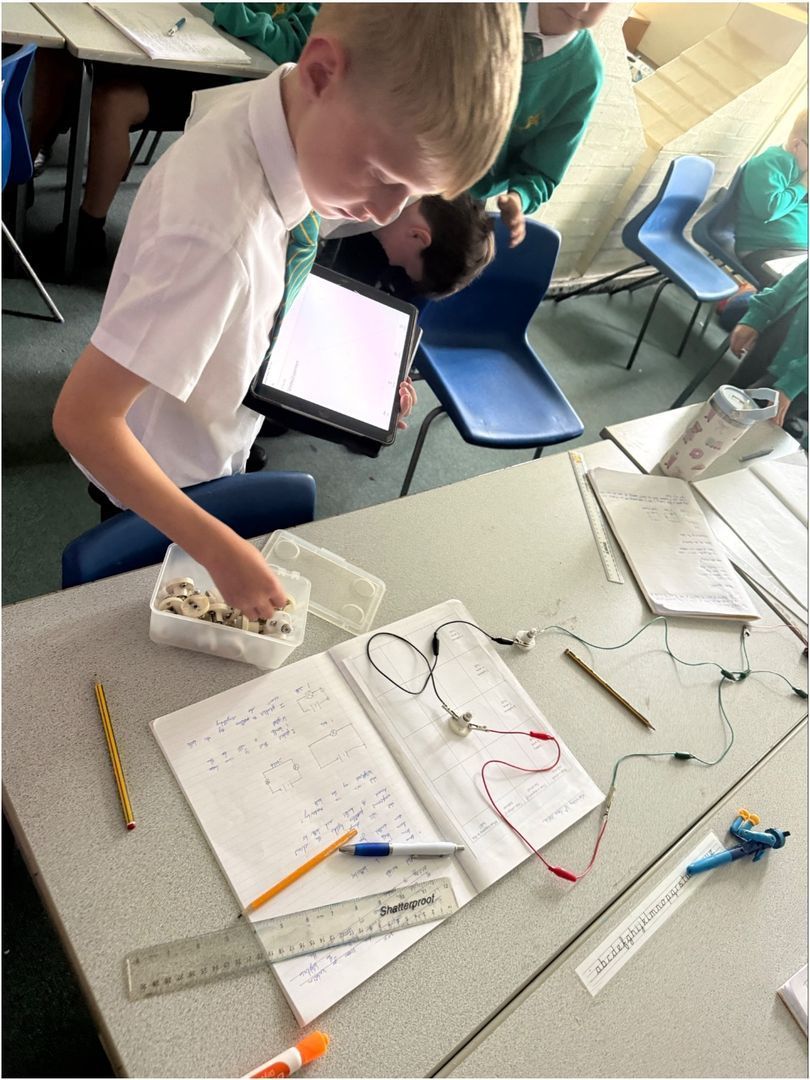
We enjoy lots of Scientific learning in our school. We have a wide and varied curriculum, ensuring that knowledge and skills are intertwined. Children are hands-on with plenty of practical lessons. We enjoy trips to the Catalyst museum and farm, as well as inviting a wide range of Scientists into school to share their experiences too. We really bring Science to life!
Hope and goals in Science
I hope to make Science exciting, memorable and interesting in our school. I want all children to have a love of Science and provide them with the knowledge and experiences that will prepare them for the ever-changing modern world, where Scientists are needed more than ever!
